Shark diver conservation
CALL: 855.987.4275 or 619.887.4275
Shark conservation
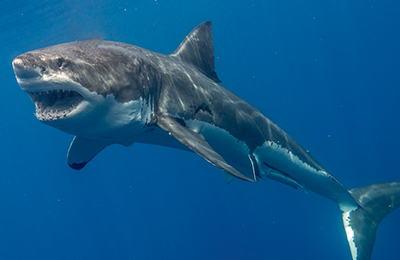
For several years, Shark Diver has been at the forefront of a remarkable evolution in industry-lead shark conservation and research efforts. In 2003, we reached out to the Californian and Mexican research community to begin the first ever industry-lead white shark research effort at Isla Guadalupe. The data that came back from that study has fundamentally changed what we know about resident sharks, our baiting methods, and even seasonal behaviors. The CICIMAR study has identified an integral predatory relationship with the Isla Guadalupe Fur Seal (Arctocephalus townsendi). While this fact may seem insignificant, less than 70 years ago the endemic population of seals was considered extinct, which now begs the question, are the white sharks at Isla Guadalupe a recovering population or a declining one?
The more shark science uncovers the more questions arise. The fundamental truth about industry-supported shark research is – with the research data regional shark populations stand a better chance of enabling real protections by management agencies. With a recently estimated global population of just 3900 white sharks, they need all the help they can get.
Nicole Nasby Lucas
Nicole Nasby Lucas is a Research Biologist with the Marine Conservation Science Institute. Nicole has been studying the white sharks of Guadalupe Island, Mexico since 2001. Her research includes satellite tagging and tracking studies to examine migration patterns and behavior. She also manages the Guadalupe Island white shark photo-ID program and maintains a database of all sharks sighted at Guadalupe Island since 1999. The photo-ID program is important for tracking the visitation patterns of individual sharks as well as monitoring the overall status of the population. By using the unique coloration of these sharks, she’s been able to identify 241 individuals to date. This project started in 2001 and some of these sharks have been seen every year since. All of this research is crucial for the management and conservation of northeastern Pacific white sharks.
Nicole is also the host for our Shark Diver Science expeditions. She grew up around water near lakes in Minnesota, but was always drawn to the ocean. She got her open water SCUBA diving certification in the cold cloudy mining lakes of northern Minnesota, but quickly put those skills to use in the warm clear Caribbean waters while studying in the Turks and Caicos Islands, followed by working at a dive resort in Honduras. She pursued a graduate degree in marine resource management from Oregon State University and performed a groundfish habitat evaluation by integrating high-resolution sonar images with submersible transect observation data. She has also worked with the NMFS protected resources division, and was a Research Biologist with the Pfleger Institute of Environmental Research working with satellite tagging and acoustic tagging technologies to study marlin, white sharks, bluefin tuna, swordfish, manta rays, black sea bass, and white seabass. She is interested in the behavior, migration and habitat use of marine fishes and sharks as well as the management and conservation of marine life and their habitats.
Nicole Nasby Lucas
Research Scientist
Marine Conservation Science Institue

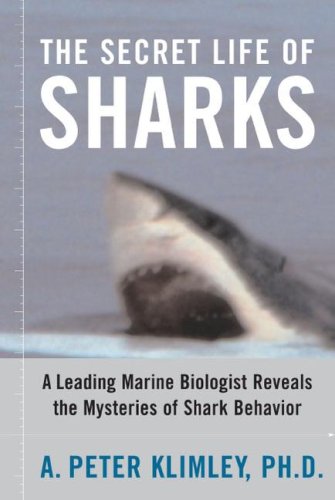
Dr. Peter Klimley
“My fondest memory of Isla Guadalupe was on a research trip with Shark Diver in 2004. I remember well a beautiful, large white shark swallowing a tuna concealing our first ultrasonic transmitter with Mauricio Hoyos-Padilla beside myself in a small boat next to the shark. The unique tagging and individual identification studies at the island have provided valuable new information and insights into the biology of white sharks here. Shark Divers clients, who come to this island to view white sharks, have contributed greatly to this project over the years.
Shark Diver has succeeded admirably in reaching out to, and supporting, the shark research community while introducing, in a safe manner, the general public to the world of the white shark. With their additional media outreach and with films like Island of the Great White Sharks they have done much to dispel the visceral fear of these animals shared by members of the public. In the past, the shout of the word ‘shark’ frightened bathers to stampede ashore on to the beach; now the same word creates excitement among divers and they eagerly enter the underwater world to view these spectacular apex predators in the clear waters off Guadalupe.”
Dr. Peter Klimley
Director, Biotelemetry Laboratory
Department of Wildlife, Fish, & Conservation Biology
University of California, Davis
Dr. Mauricio Hoyos Padilla
“Due to its location as the westernmost island off Baja California and the resultant isolation, Guadalupe Island is a very difficult site to conduct research. Thanks to the initial vision and unwavering support of Shark Diver we have been able to be on site to conduct important tagging and DNA research, receive donations, and get logistical support. In tandem with Shark Diver we started our research program in 2003 and we have been working with the white sharks here for eight years, a stunning achievement for marine science in Mexican waters. As a white shark researcher I am impressed that Shark Diver has portrayed, in a positive manner, the white sharks here, and continues to treat the animals with utmost respect, which is a key aspect in the conservation of these magnificent sharks.”
Dr. Mauricio Hoyos Padilla
Centro Interdisciplinario de Ciencias Marinas CICIMAR

Noblesse oblige letter to the Industry
Blog post - 2008
There’s an old French saying “Noblesse Oblige”.
It roughly translates in to Noble Obligation. Those who are on the front lines of an issue and who can effect change have a noble obligation to do so.
That brings us to the state of commercial shark diving worldwide. The industry is valued at $300-400 million dollars and for the most part, operators are content to show divers sharks, make money and repeat. Without a doubt the current state of “Noblesse Oblige” in our industry is at an all-time low.
Let me qualify this statement before the angry emails start. In our world, effecting change with sharks goes beyond just interacting with these animals on a commercial level or aligning ourselves with non-profits that are doing all the heavy lifting. You have to be engaged, you have to create directional focus and motivate people who might not consider it, to be active in the shark community. Let’s face it with 80 million sharks being killed each and every year there’s little room anymore for fence sitters who are content to just make money diving with sharks.
Operators should be bound by “Noblesse Oblige” to create conservation efforts outside their operations. That means real and lasting projects that further the protection of sharks, shark science, and conservation.
Having said this, there are some simply stunning projects out there that are fully supported by many forward thinking commercial shark diving operations. They are, unfortunately, the minority of the industry and we can do much better beyond a few online petitions, some POS material on a vessel, and an eco-chat with our guests.
As front line sentinels, operators from California to South Africa are often the first to report trouble, and have a key insight into the health and direction of local shark populations. One of the misnomers is that real and effective shark conservation costs a lot of money, it does not.
It does take time and effort beyond operations.
There are many within the shark community who are trying to make every year ‘The Year of the Shark.’ To that may we add “Tiburon Noblesse Oblige”… the hope that operations worldwide look to where they can become involved, create local efforts, websites, focus, and direction.
We cannot allow shark NGO’s to shoulder the shark conservation burden alone. Noblesse Oblige can and will effect lasting change for shark conservation.
Time is a luxury that sharks, unfortunately, do not have.